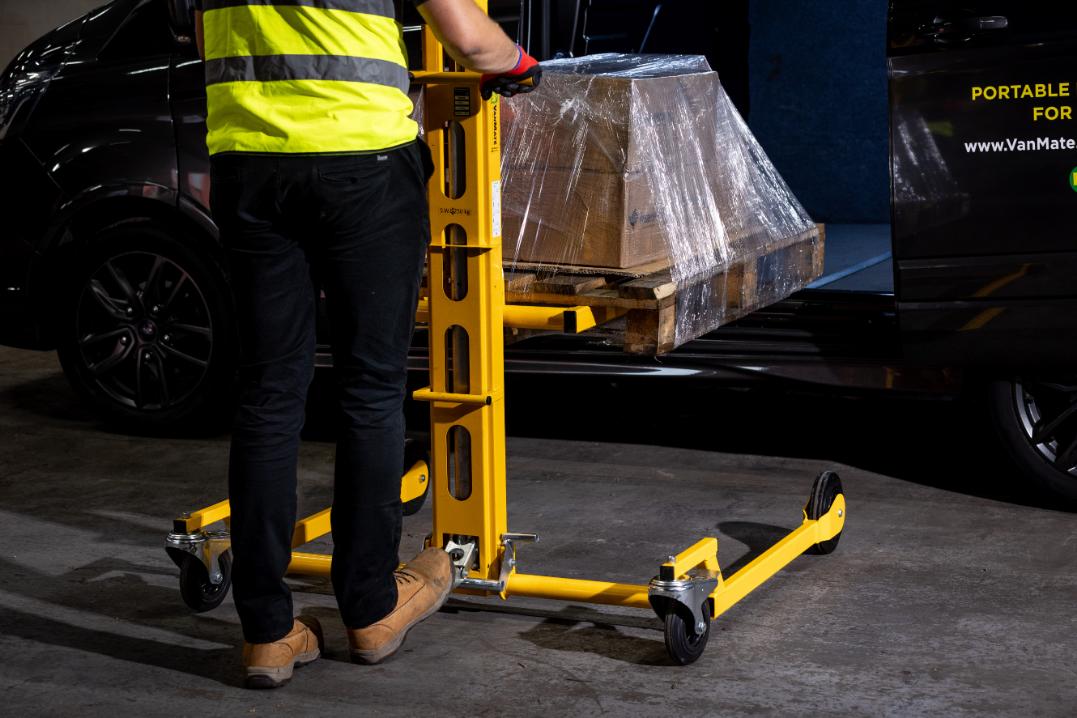
Engines and gearboxes are heavy, oily, hard to grip and top-heavy once they leave the ground. Most travel on a stillage, pallet or in a crate, and most are delivered by one driver to a garage that has no lifting equipment of its own. That combination is where back injuries and dropped units happen.
A suitable engine lifter makes it possible to:
• Unload a crated or palletised engine from a van without climbing into the load space
• Deliver reconditioned engines and gearboxes to garages and workshops
• Collect old units for return and load them back into the van
• Move engines and gearboxes across a depot, warehouse or workshop floor
• Raise a unit to a comfortable height for inspection or unpacking
• Slide heavy parts up to the bulkhead so the van stays balanced in transit
Car and light commercial vehicle engines, new or reconditioned
• Manual and automatic gearboxes
• Differentials and axle parts
• Engines and gearboxes in stillages, crates or on pallets
• Farming and construction vehicle components
• Generators, pumps and other machinery items
• Non-standard units, handled with a modified or bespoke attachment
Motor factors, parts distributors and engine remanufacturers deliver heavy units every day. A portable engine hoist or workshop engine crane is the right tool for lifting an engine out of a vehicle bay, but it is bulky to carry between jobs and awkward to use at the back of a small van. VanMate handles the delivery side of the job. The Extended Forks attachment slides under the stillage or crate, the foot pedal lifts it clear of the van floor, and the same trolley wheels it to wherever it needs to go.
LKQ, formerly Euro Car Parts, delivers oil drums and delivers and collects engines and gearboxes across its branch network. It was using three separate pieces of equipment to do it. VanMate replaced all three at around 30% of the cost, 40% lighter and transferable between vans. After a live branch trial it is now used across the LKQ network in the UK and Ireland, and the lighter kit let LKQ move deliveries out of large Boxer vans and into smaller Partner and Connect vans. Read the LKQ case study.
Operation is the same across the VanMate range:
1. The trolley, mast and Extended Forks are assembled, which takes under 15 seconds.
2. The lifter is wheeled to the van door, stillage or pallet.
3. The forks slide under the stillage, crate or pallet, and a belt secures bulkier loads.
4. A foot pedal drives the hydraulic mast and raises the unit.
5. The unit is wheeled to its destination, with braked rear castors for extra security on slopes.
6. The operator lowers it under control, as DuoPump automatically slows the descent on heavy loads.
If your units don’t sit on a standard stillage, your vans have unusual access, or you need to lift more than 250kg, our in-house engineering team in Leicestershire can modify a standard VanMate or design a new one.
• Custom forks and cradles for specific engine and gearbox types
• Pallet access trolleys for lifting from pallet corners
• Extended masts for higher lifting ranges
• Capacities above the standard 250kg, up to 400kg SWL
• VanMate Slider systems for moving heavy parts to the bulkhead
• Door mounting kits for storing the mast and attachments in the van
VanMate is designed to lift and move engines and gearboxes once they are out of the vehicle, usually on a stillage, crate or pallet. For removing an engine from the engine bay you would still use a workshop engine crane or portable engine hoist.
Standard VanMate kits lift up to 250kg. Bespoke systems can be built up to 400kg SWL.
No. VanMate is fully manual, using a hydraulic foot pedal, so there is no battery to charge and nothing to wire into the vehicle. That makes it a practical option for electric vans, where a powered crane may not be possible to fit.
Send us the weight of your engines or gearboxes, how they are packed and the vans you use, and we’ll recommend the right kit.

Uses our patented DuoPump technology for fast lifting of the load with an intuitive single pedal operation for lifting and lowering.
Our products are designed and manufactured in-house, using the latest manufacturing techniques, CE/UKCA Marked and rigorously tested to ensure compliance with all relevant standards.